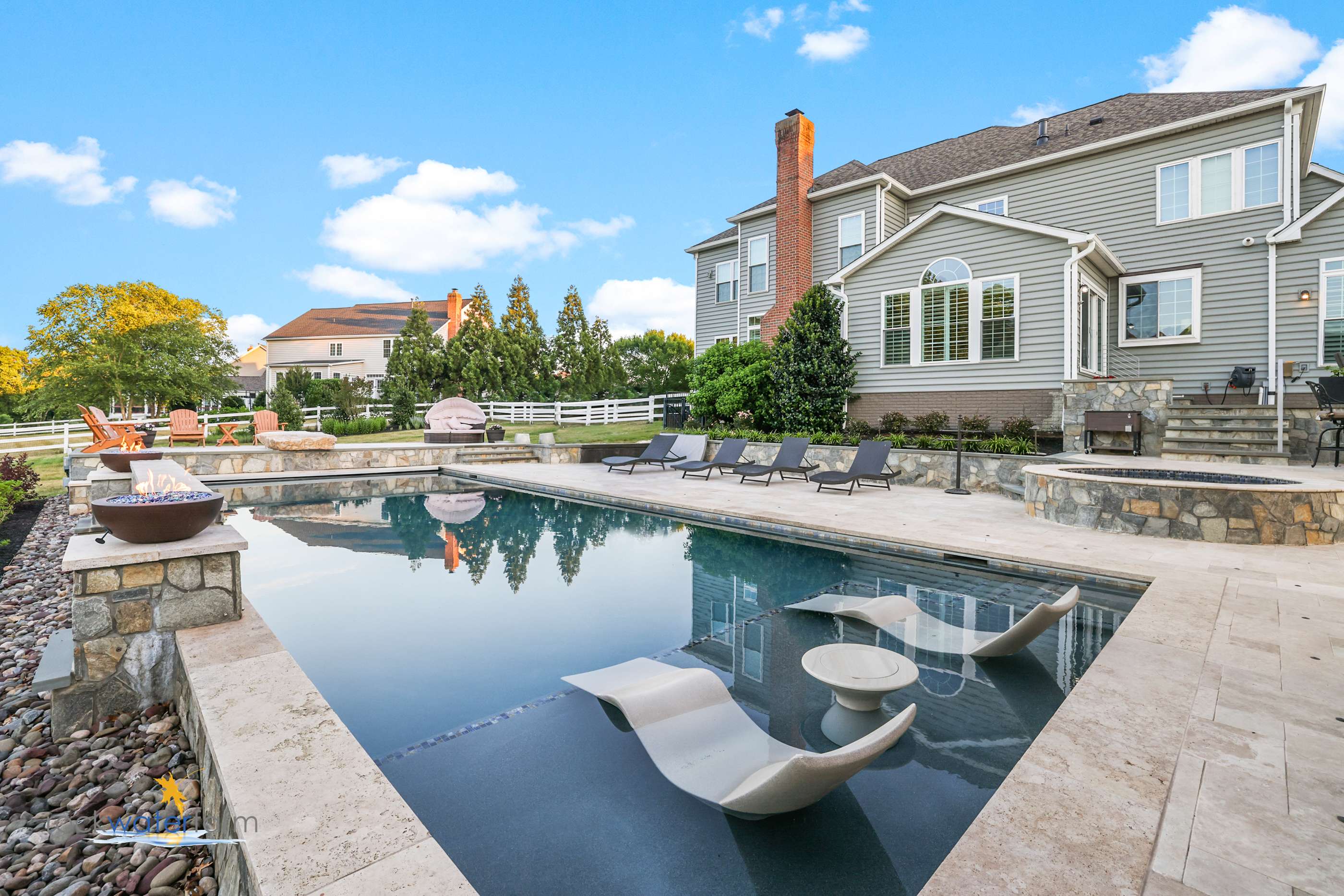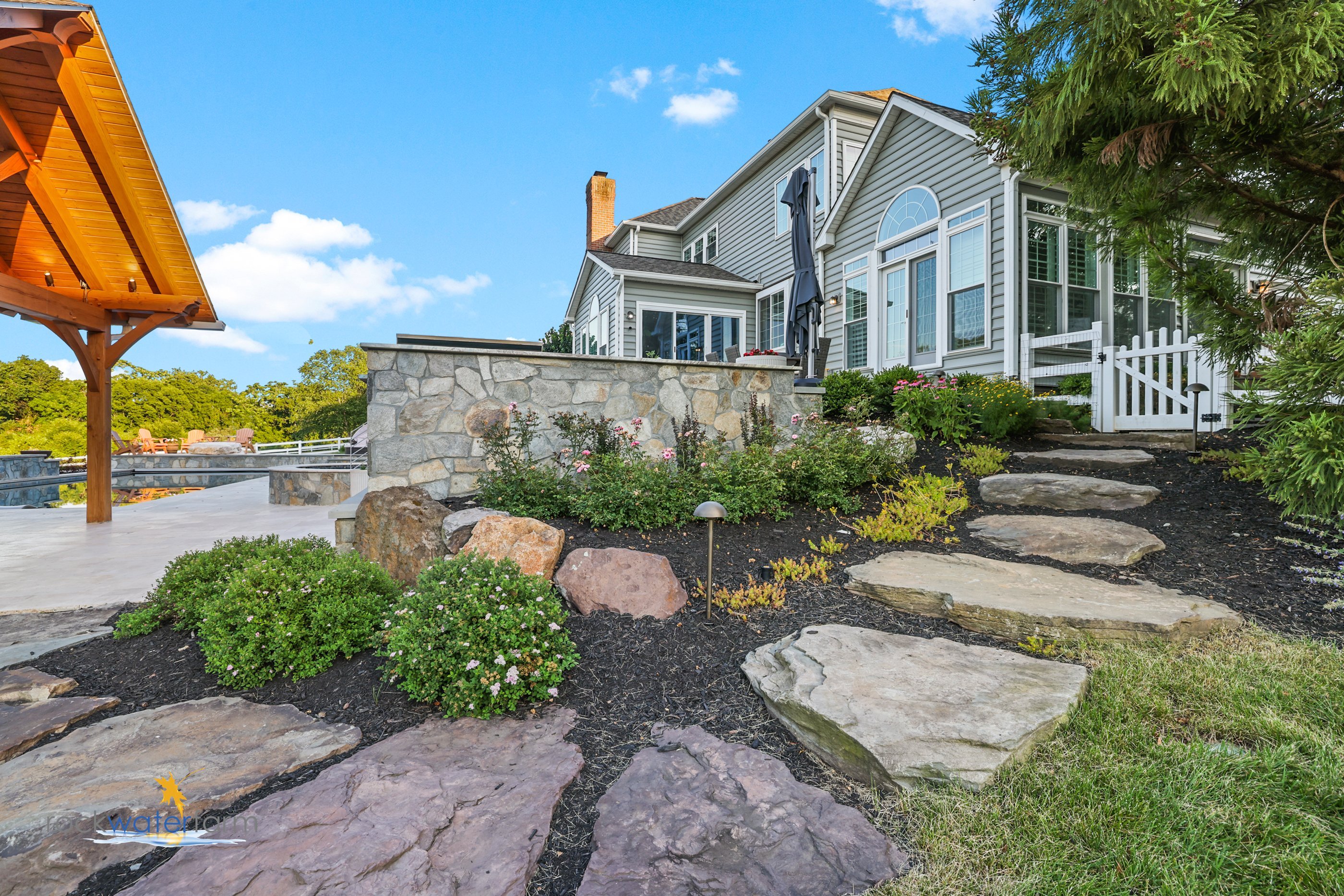

Adding another level to a deck sounds like a guaranteed improvement until you realize you have also added another structure to design, connect, furnish, and walk around for the next couple of decades. A successful custom deck design needs a reason for every elevation, especially when stairs and changing grades start claiming valuable space. Experienced deck builders in Aldie, VA, can work those details out before construction begins, which is generally preferable to discovering halfway through the project that the grill has accidentally been assigned its own floor.
Rock Water Farm designs and builds custom decks throughout Northern Virginia, from single-platform layouts to expansive multi-level structures. Our design-build team can also integrate decks with patios, walkways, landscaping, pools, outdoor kitchens, fire features, and other outdoor improvements, creating one cohesive environment instead of asking several unrelated projects to politely coexist in the same backyard. To contact a member of our team, call (703) 423-0101 today!
Below, we share everything you need to know when planning a multi-level deck:
More Levels Need More Reasons
Every level should have a purpose before it earns a place in the design. One might extend directly from the house for dining and grilling, while another creates a lounge area closer to the yard. A change in elevation can also separate activities without putting up walls, which would somewhat defeat the purpose of going outside.
Problems begin when another tier gets added simply because a multi-level deck sounds impressive. Extra levels also bring additional framing, railings, stairs, and square footage into the project, all of which have the inconvenient habit of costing money. Establishing how people will actually use each area gives the design somewhere useful to go before enthusiasm starts adding platforms nobody requested.
The Yard Gets a Vote
A deck drawing can be flawless right up until it encounters the property where it has to exist. Grade, drainage, existing doors, architecture, and the surrounding landscape all influence where each level should sit. Sloped yards are particularly well suited to multi-level designs because different elevations can follow the terrain and create more natural transitions between the house and lower portions of the property.
This is why the site should shape the design instead of being treated as an obstacle to a predetermined idea. A deck that ignores the yard may leave you with unnecessary stairs, awkward access, or a lower level staring directly into a retaining wall. Gravity has been remarkably consistent for quite some time. Designing around it is usually easier than asking it to reconsider.
Stairs Shouldn't Become the Main Event
Stairs connect the levels, but they also consume space and dictate how people move through the deck. Their position affects furniture layouts, access to the yard, and the path between areas used for cooking, dining, and relaxing. Put them in the wrong place and a generously sized deck can develop the traffic pattern of a poorly designed airport.
The same logic applies to transitions beyond the deck itself. If a lower level leads toward a patio, pool, or fire feature, people should be able to reach it without completing a ceremonial lap around the furniture first. Rock Water Farm designs complete outdoor environments, allowing decks, patios, walkways, and landscaping to be considered together instead of figuring out how to connect them after everybody has already gone home.
One Deck, One Bigger Picture
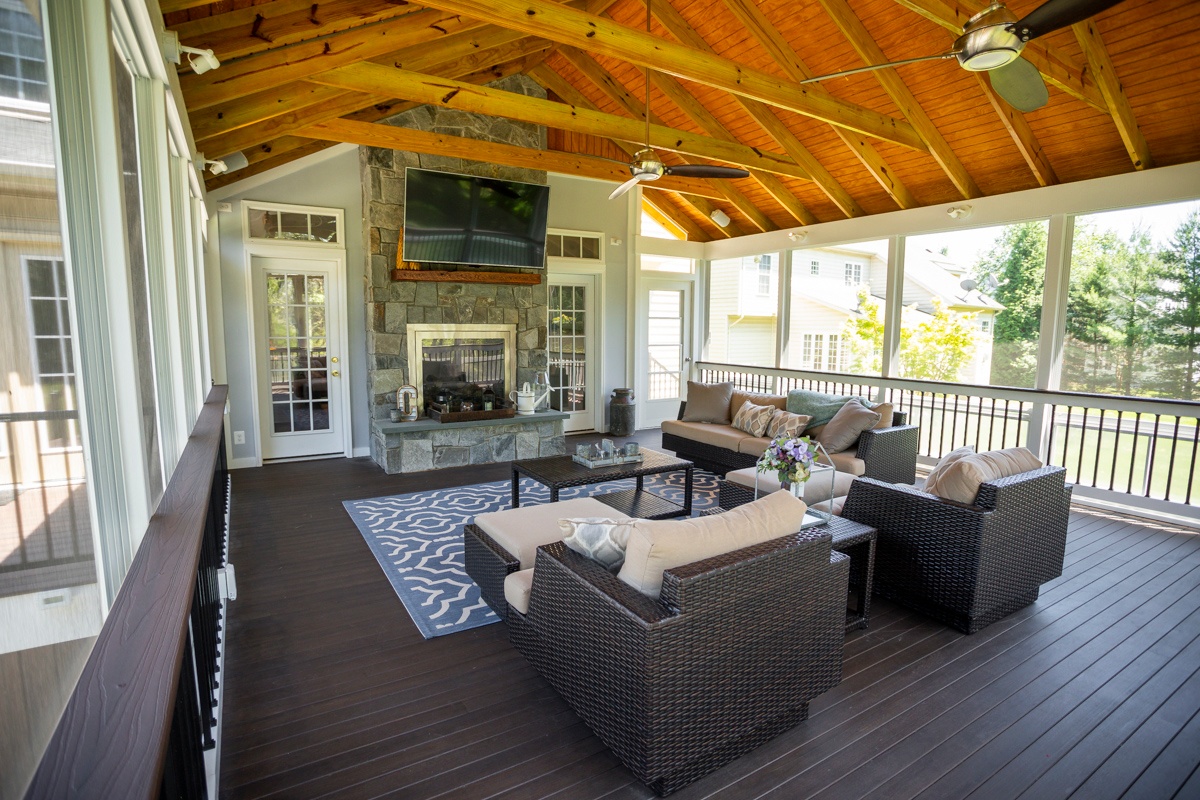
A multi-level deck rarely exists in a backyard by itself. There may already be a patio below it, a pool nearby, landscaping around it, or plans for an outdoor kitchen that everyone swears they will use constantly. A thoughtful custom deck design accounts for those relationships early so one feature does not make another inconvenient.
Rock Water Farm integrates decks with other outdoor living elements specifically for this reason. The dining level can connect logically to an outdoor kitchen, stairs can arrive somewhere useful, and surrounding plantings can soften the structure without swallowing it five years later. A backyard should look like someone designed the whole thing on purpose. “We built this first and figured out the rest later” is a strategy, technically, but not one we recommend.
Good Decks Aren't Built on Wishful Thinking
Deck construction can happen during different parts of the year, so there is no single magical season when lumber becomes cooperative, and rain respects your calendar. Starting the design process before peak outdoor-living season can provide more time for planning, approvals, material selections, and scheduling. Waiting until the first perfect Saturday of spring to decide you need a new deck is also an option. It is simply an option shared by many other people.
As for deck installation, we advise that clients can often expect to use a new custom deck or porch within roughly 30 to 60 days after construction begins, although project scope, material availability, and weather can change the timeline. Before breaking ground, the design must also be finalized, and HOA documentation may need attention. Multi-level projects naturally introduce more structural details than a basic platform, so a realistic schedule is considerably more useful than being promised “next week” by someone with tremendous confidence and no control over thunderstorms.
Build Smarter With Rock Water Farm’s Deck Builders in Aldie, VA
A multi-level deck works best when every elevation contributes something useful to the property and connects naturally with the spaces around it. Rock Water Farm's deck builders in Aldie, VA, design and construct custom decks using high-performing composite and PVC materials, with the ability to incorporate patios, landscaping, pools, outdoor kitchens, and other features into the larger plan. To contact a member of our team, call (703) 423-0101 today!